Post-Collision Calibration
After any collision — major or minor — your vehicle's safety sensors need professional scanning and calibration to restore them to factory specifications and ensure your safety.
The Safety Chain After Collision
Calibration is the final, critical link in making your vehicle safe again after an accident.
When your vehicle is involved in a collision, the repair process typically follows a specific sequence: structural repair, then wheel alignment, then a final diagnostic scan and ADAS calibration. Each step depends on the previous one being completed correctly.
Structural repair restores the vehicle's geometry. Precision wheel alignment ensures the suspension and steering are correctly positioned. But the final step — ADAS calibration — is what actually restores your safety systems to working order.
Without this final calibration, your vehicle may look repaired and drive fine, but the cameras, radar, and sensors that protect you on the road could be misaligned and malfunctioning. The calibration is the last mandatory step to make your car 100% safe again.
From Collision to Complete Safety
Collision
Impact damages structure and shifts sensor mounting points.
Structural Repair
Body shop repairs frame, panels, and mounting locations.
Precision Alignment
Wheel alignment restores suspension and steering geometry.
ADAS Calibration
Final scan and calibration restore all safety systems.
Sensors Behind the Panels
What you can't see after a collision is often what needs the most attention.
Behind your vehicle's bumpers, fascias, and body panels are radar sensors, ultrasonic sensors, and cameras that you can't see from the outside. These components monitor blind spots, detect obstacles for parking assist, and enable automatic emergency braking.
In any collision — even a minor fender bender where airbags don't deploy — these hidden sensors can be knocked out of alignment or damaged. The bumper may look fine after repair, but the radar behind it could be pointing in the wrong direction.
These sensors require either static calibration (using targets in a controlled environment) or dynamic road-learning scans (driving the vehicle at specific speeds while the system learns the road geometry) to return to factory specifications.
Collision, Alignment & Steering Angle Sensor
How wheel alignment directly affects your ADAS calibration.
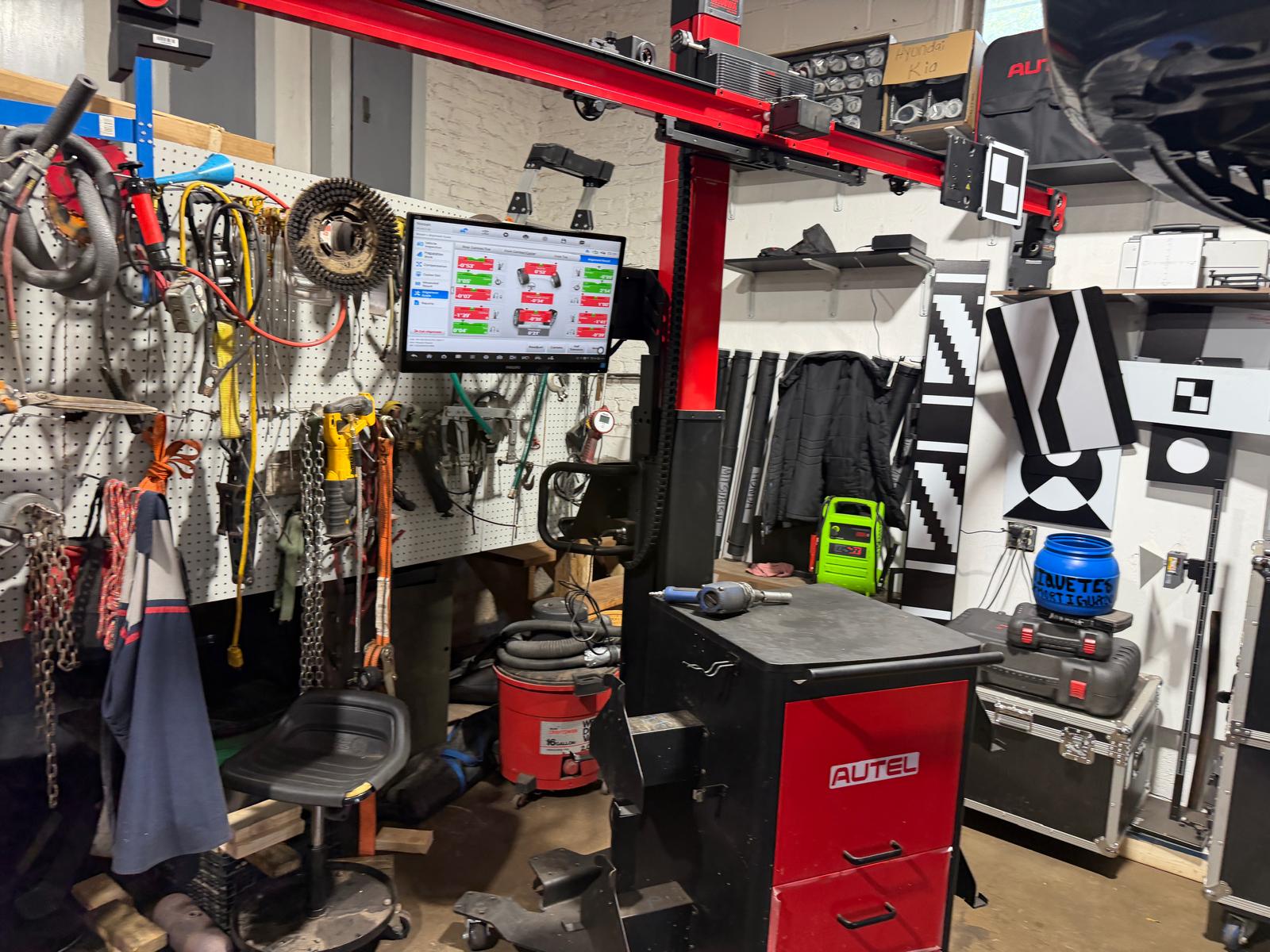
When your vehicle is involved in a collision, the impact can bend suspension components, shift the steering wheel position, and alter the vehicle's alignment. Even if the damage looks minor, the geometry underneath has changed.
Your vehicle's Steering Angle Sensor (SAS) tells the ADAS computer which direction the wheels are pointing. If the alignment is off, the SAS reports incorrect information, which causes lane-keeping assist, automatic emergency braking, and other systems to malfunction.
This is why precision wheel alignment is often a required part of the post-collision calibration process. We correct the alignment first, then calibrate the SAS, then perform the full ADAS calibration — ensuring every system works from the correct foundation.
Even minor collisions where airbags don't deploy can shift sensors out of alignment. Any impact to the front, rear, or sides of your vehicle requires professional scanning.
Complete Post-Collision Care
Precision Wheel Alignment
Critical foundation for post-collision ADAS calibration.
Learn More
Full ADAS Calibration
Complete calibration of all vehicle safety systems.
Learn More
Radar Sensor Calibration
Specific calibration for radar-based safety systems.
Learn More
Windshield Calibration
Forward camera calibration if windshield was replaced.
Learn More